Micsig high-voltage differential probe DP700/DP1500/DP3000: pick the version by the voltage you actually measure, then check the BNC input on your scope

Images and product details come from third-party platforms and belong to their respective owners. They are shown for reference only.
This is a Taobao store based in mainland China. If your shipping address is outside mainland China, please confirm with the seller whether international shipping is available before purchasing.
Affiliate link — we may earn a commission at no extra cost to you.
About this product
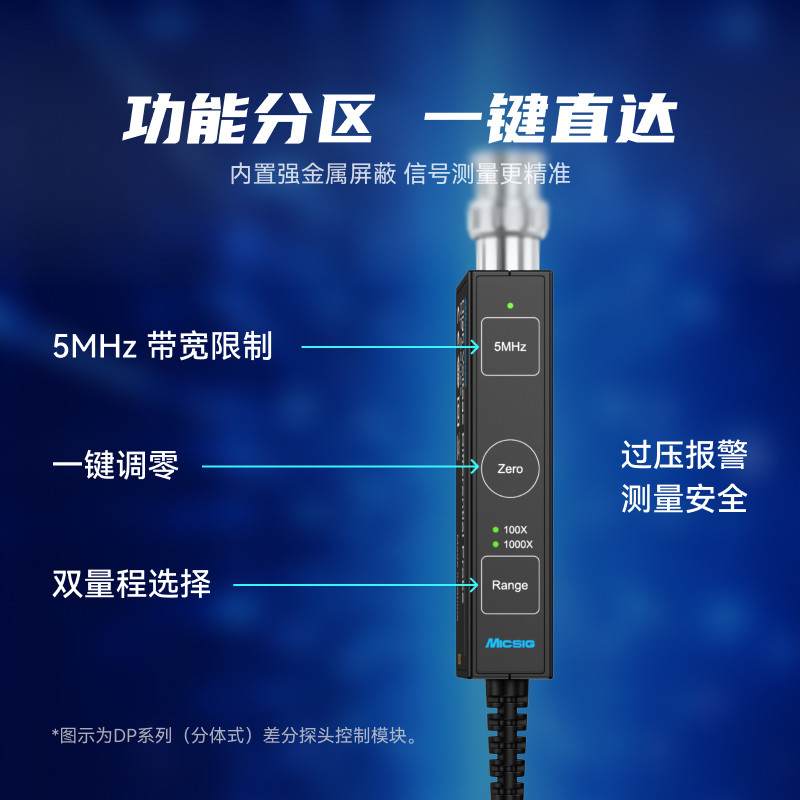
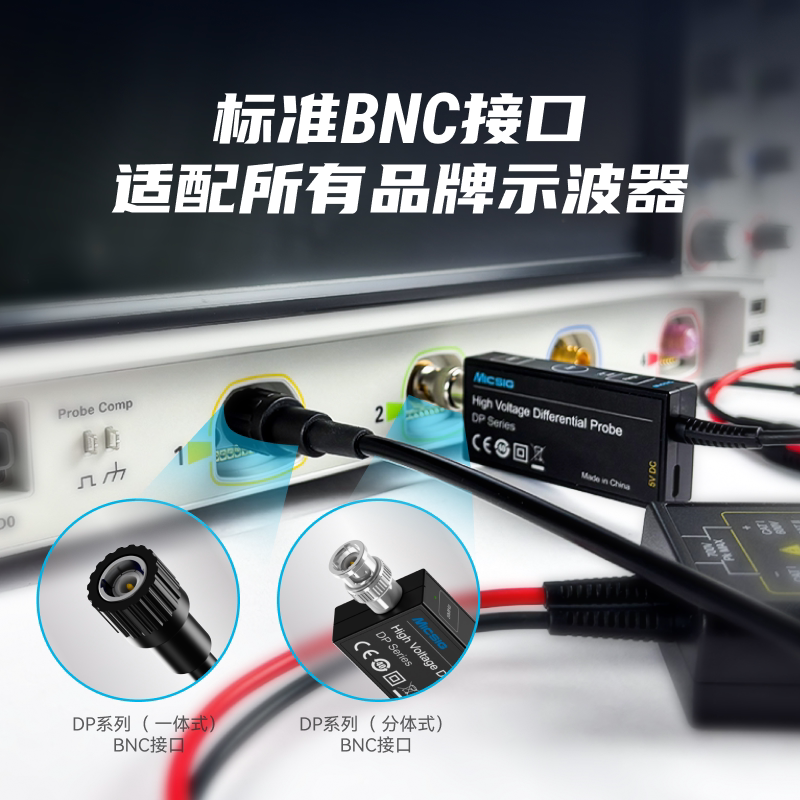
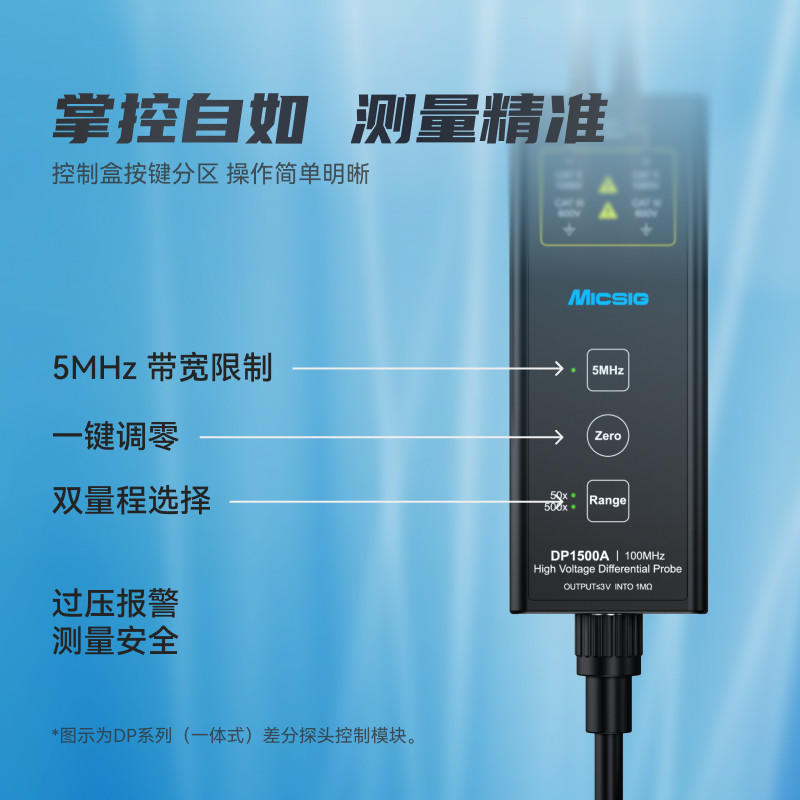
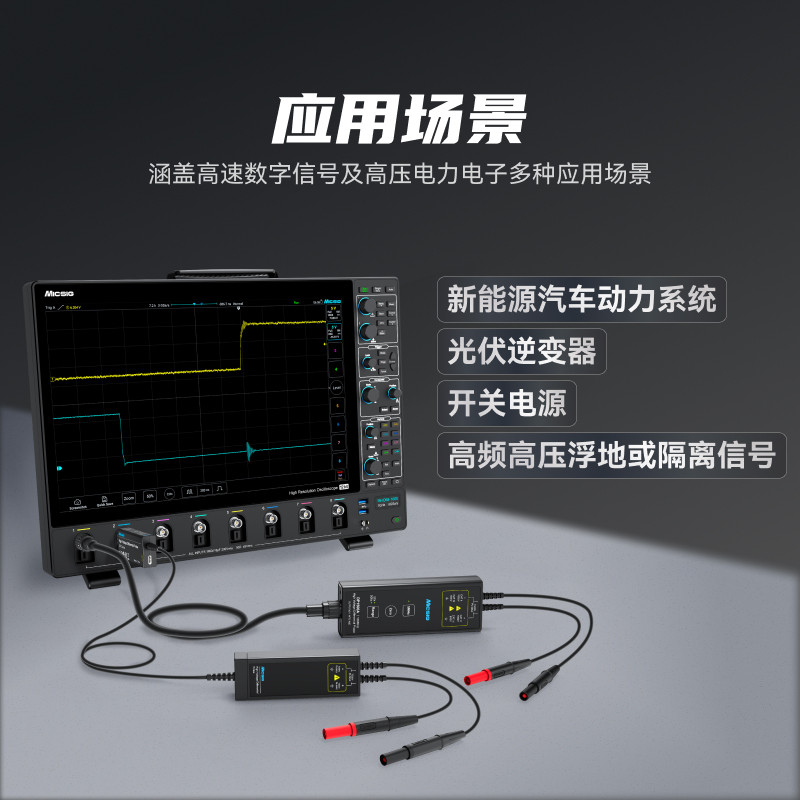
A differential probe answers a problem a normal passive probe cannot: it reads the voltage between two points without tying either one to earth. That matters the moment you look at mains, a switch-mode supply or an inverter output, where clipping the ground lead of a passive probe to the circuit can put the scope chassis at a live potential. The probe attenuates the difference down to a level the scope input accepts, and the output is a BNC plug that goes straight into a normal channel. This listing sells three versions on one page - DP700, DP1500 and DP3000 - and the version follows from the highest voltage that will appear between the two test points, not from the supply you think you are measuring; the top version is stated as covering up to 7000 V. Probes of this kind are usually powered from their own USB supply, so budget a free port. Before ordering, confirm three things: the DC plus AC peak rating of the exact version in the price you are paying, whether the bandwidth and attenuation figures suit the frequency you actually measure, and whether the voltage clips and adapters are included.
Product images
Pros & cons
Pros
- Reads the difference between two test points without referencing either to earth, which is what makes mains and switch-mode measurements safe to take
- Three voltage classes share one listing, so the version can be matched to the circuit instead of overshooting
- BNC output plugs into a standard scope channel with no special front end
- Attenuates the signal so the scope input sees a level it can handle
- Comes from a maker that also builds the scopes these probes attach to
Cons
- The model number sets the voltage rating, so confirm the price you see belongs to the version you need
- Ratings are quoted as DC plus AC peak - a fast switching waveform can sit higher than the nominal supply voltage
- The probe needs its own power feed, which adds another cable and port to the bench
- Bandwidth and accuracy class are separate from the voltage rating, so check them against the work you actually do